



Enhancing Care Coordination for Complex Patients with CVS Specialty and Unite Us
 CVS Specialty, CVS Health’s pharmacy for complex and rare conditions, works with Unite Us to enable its integrated care coordination patient support model and to more proactively identify and address non-medical needs. Since CVS Specialty began working with Unite Us, 78% of cases among patients who were referred for services have been resolved with significant improvements over time. Unite Us’ Care Coordination Services have also expanded access for addressing additional needs, while saving administrative time and enhancing patient engagement. By addressing these needs, the approach has generated an estimated $4.2 million in household economic impact and nearly $3.8 million in estimated healthcare cost savings.

Key Takeaways
In this case study, you’ll learn how:
 CVS Specialty has generated a combined estimated $8 million in savings for households and in reduced healthcare spending: By resolving HRSNs through Unite Us, patients increased or preserved income and reduced reliance on high-cost healthcare services.
 A no-wrong-door approach is critical for expanding access, with 39% of assistance requests initiated directly by patients: Giving patients the ability to act on their needs in real time increased engagement and strengthened self-advocacy.
 Dedicated Care Coordinators helped patients receive more comprehensive support: Through direct engagement with patients, Unite Us Care Coordinators often uncovered additional needs beyond what was initially requested.
household economic impact and healthcare savings
case resolution rate
administrative hours saved
.
Background
CVS Specialty pharmacy supports people living with rare and complex conditions (e.g. conditions like pulmonary hypertension, cancer, cystic fibrosis, autoimmune, etc.) requiring high-cost, highly individualized treatments. These conditions often require ongoing clinical monitoring, strict adherence to therapy, and coordination across multiple providers. To support these complex needs, CVS Specialty teams play a central, hands-on role throughout the patient care journey, providing education, monitoring treatment progress, and serving as a consistent point of contact.

Challenge
In addition to the clinical complexity of their conditions, CVS Specialty patients often face significant challenges outside of the clinic walls, such as food insecurity, unstable housing, transportation challenges, and financial strain. These gaps in support can directly impact patients’ ability to stay on treatment and successfully manage their condition.
Solution
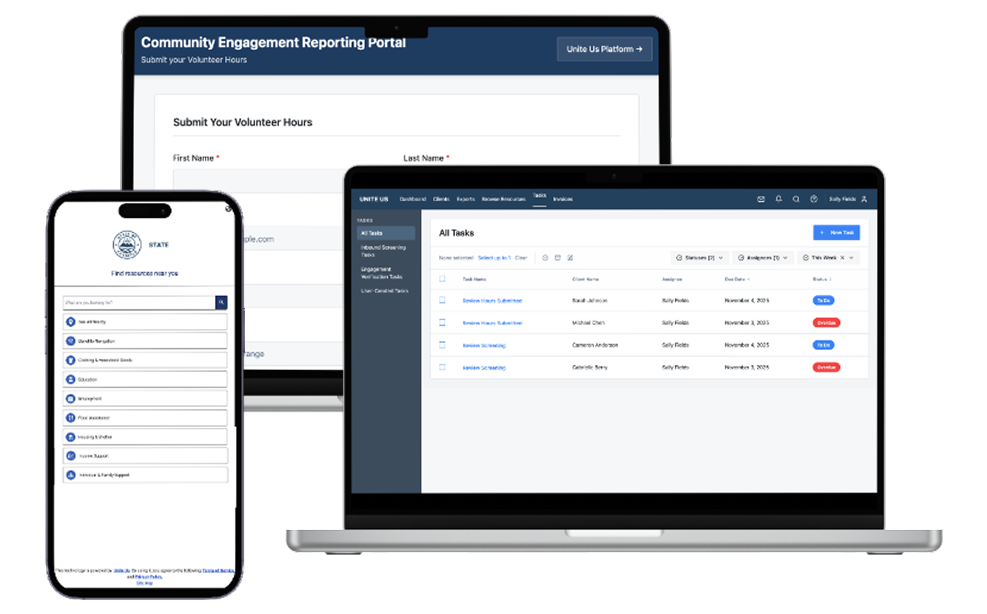
To address these gaps, CVS Specialty teamed up with Unite Us, implementing its closed-loop referral platform in 2023 and integrating Unite Us’ dedicated Care Coordination Team into its patient support model in 2024.
When a need is identified, either the patient or the CVS Specialty care team member can submit an electronic Assistance Request Form (ARF) to initiate support in specific use cases. The ARF is routed directly to Unite Us Care Coordinators who then take the lead: conducting outreach, assessing patient needs, and connecting individuals to appropriate community-based resources.

Impact
Who Is Being Reached
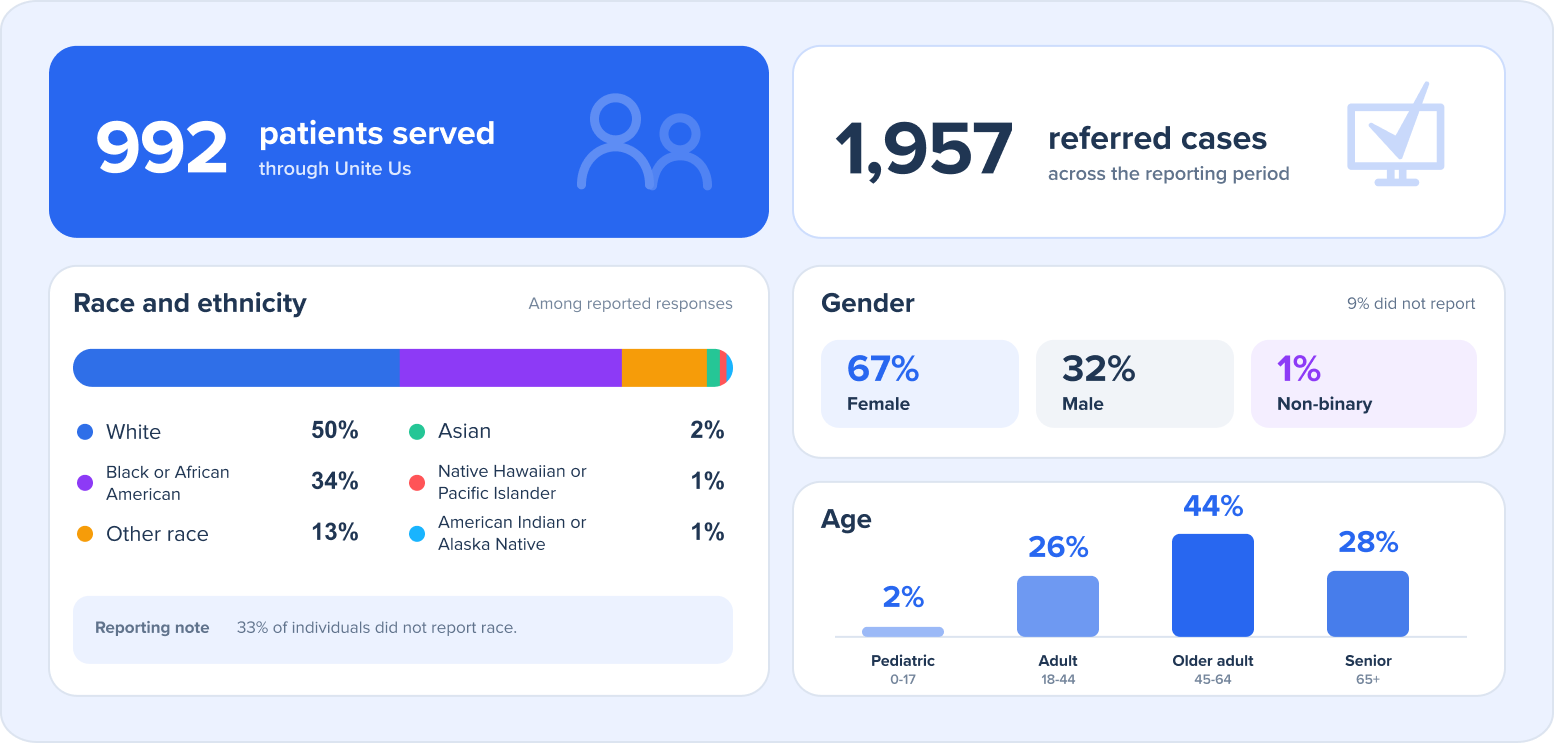
CVS Specialty patients commonly experienced significant unmet needs that can impact overall stability and adherence to treatment, with the most prevalent needs including housing and shelter (40%), utilities (37%), and food assistance (36%).
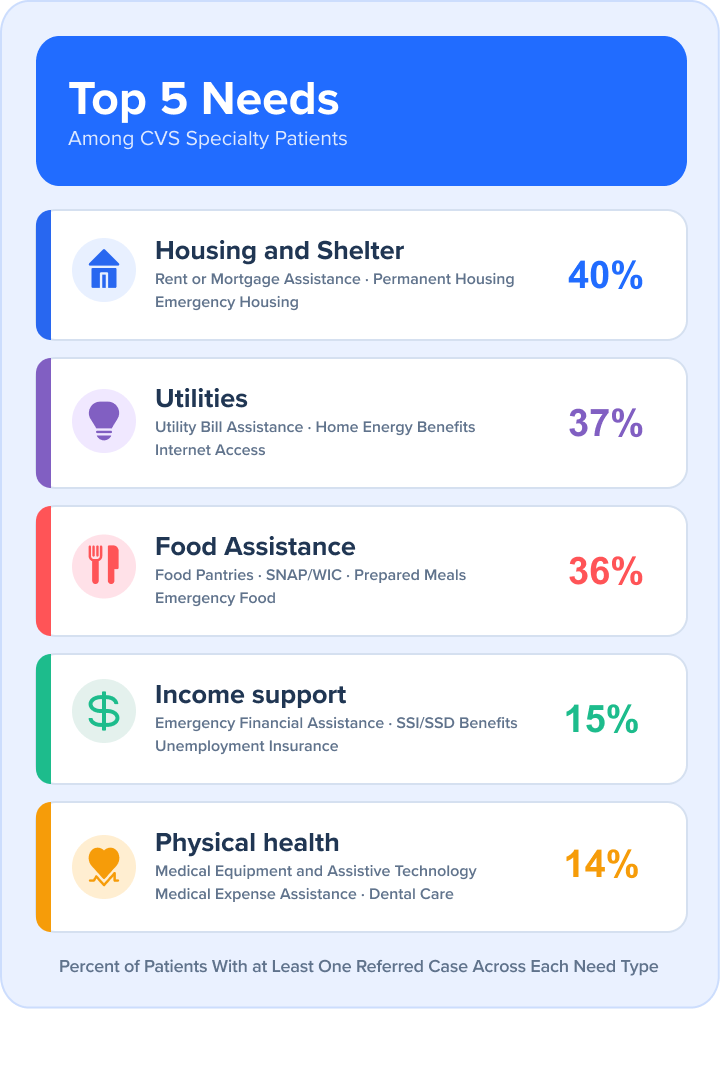 Importantly, these needs are often not isolated. Patients frequently experienced multiple, overlapping challenges, with an average of 2.3 referrals per person and nearly half of patients facing co-occurring needs. The three most common needs of food, housing, and utilities often co-occur; among patients with food needs, over 45% also required utilities support and roughly one-third required housing assistance. This clustering suggests that challenges in one area often reflect broader household needs, reinforcing the importance of coordinated support to address multiple barriers at once.
From Unmet Needs to Identified Support
Embedding Unite Us’ services into CVS Specialty’s care model has expanded its ability to identify patient needs, offering a model that enables more continuous proactive engagement. As of April 2026, 39% of all requests were submitted directly by patients, enabling patients to have a more active role in their care. Following submission, Unite Us Care Coordinators engaged with patients quickly, with a median time to patient outreach of just one day.
At the same time, Care Coordinators played a critical role in expanding upon these initial requests. While ARFs enable patients and the CVS Specialty care team to proactively identify needs, Care Coordinators build engagement by identifying additional needs through direct patient outreach. In total, 963 additional Unite Us cases, representing approximately 49% of all referred cases, were created through care coordination beyond the initial request. By building trust and maintaining ongoing engagement, Unite Us Care Coordinators have helped patients receive more comprehensive, coordinated support.

User Feedback
“I am so thankful we have a program like this that allows us to offer help to a vulnerable group of people who are often thrown into a very different lifestyle than they once had before diagnosis. They often feel very helpless and overwhelmed about everything with no idea where to look up resources.”
– Nicole Borek, BSN, RN, Nurse Clinical Educator, CVS Specialty
“It feels so good to have a platform to offer support to our patients. A further extension of how CVS Specialty really cares about our patients.”
– Amy Sullivan, RN, PAH Nurse Clinical Educator, CVS Specialty
“…..we can identify the needs but don’t always know where to turn to help, sometimes as trivial as a BP cuff or a scale, and other times, unhoused individual need a major team approach. Also, being able to get medication on time to a patient that doesn’t have an address is quite a challenge. Having Unite Us is a game changer!”
– Diane Brighton, RN, BSN, PAH Nurse Clinical Educator, CVS Specialty
Building a Reliable System to Address Patient Needs
Once patient needs were identified, 78% of referred cases were successfully resolved, with a median time to resolution of 22 days after ARF submission, demonstrating both effectiveness and efficiency in connecting patients to services. System performance also improved significantly over time, with resolution rates increasing from 53% in the first year to 91% in the most recent year, reflecting strengthened network performance. Importantly, the system effectively addresses the most common needs of this population. Housing, food, and utilities, which together account for over 60% of all referrals, also show strong resolution rates: food assistance at 84%, utilities at 80%, and housing at 78%.

Expanding Support Without Adding Burden
By embedding Care Coordination Services and streamlining digital workflows, CVS Specialty has expanded the scope of support provided to patients without increasing the burden on clinical teams. Unite Us Care Coordinators take on key non-clinical responsibilities, including conducting patient screening and outreach, matching patients to appropriate community-based services, sending and managing referrals, and tracking and documenting outcomes. By centralizing these tasks, using Unite Us has saved CVS Specialty staff an estimated 522 administrative hours.¹
Driving Measurable Value for Patients and the Healthcare System
Addressing HRSNs not only improves patient stability but also generates meaningful economic value. Among CVS Specialty patients served through Unite Us, resolved cases are estimated to have generated more than $4.2 million in additional or preserved household income.² Care Coordination played a significant role in driving this value. Of the total estimated household impact, more than $2.3 million (55%) is attributable to the additional needs identified by Unite Us Care Coordinators beyond the initial request. We additionally estimate that by resolving needs related to food assistance and housing through Unite Us, CVS Specialty saved $3.8 million in healthcare costs, and nearly $2.2 million (56%) of these savings stemmed from needs uncovered through Care Coordination.³
 Bringing the Impact to Life
The impact of coordinated support is also evident in individual patient journeys, and in the strength of partnerships with community-based organizations like Team PHenomenal Hope. CVS Specialty works together with Team PHenomenal Hope to advance the national nonprofit’s mission dedicated to supporting individuals living with pulmonary hypertension (PH) through advocacy, financial assistance, and community support.
This impact is reflected in individual patient outcomes, such as that of Jane, a CVS Specialty patient living on a fixed income who was struggling to afford basic needs, including utilities, transportation, and food. After being referred to Team PHenomenal Hope through Unite Us Care Coordination, Jane was able to access emergency financial assistance, along with additional community resources for food and utilities. This coordinated support helped stabilize her immediate needs, enabling her to manage daily living and remain engaged in care.
The value of this support is also evident in the experiences of CVS Specialty care teams, who see firsthand how access to resources impacts their patients.

“At Team PHenomenal Hope, Unite Us has increased our capacity when it comes to our application process. In terms of efficiency, eligibility, and quicker patient support, the platform has been very useful. We definitely appreciate the collaboration.”
Tonya Kidd,
Program Manager at Team PHenomenal Hope
edited for clarity
Lesson Learned
 Enabling patient action strengthens engagement and accelerates support: Providing patients with direct pathways to request assistance through ARFs empowers individuals to take a more active role in their care. By enabling patients and caregivers to raise needs as they arise, rather than waiting for clinical touchpoints, organizations can identify barriers earlier and respond more quickly. This approach not only improves access to support but also fosters greater patient engagement and ownership in managing their health and well-being.
- Dedicated care coordination support expands need identification and enhances impact: Dedicated Care Coordinators played a key role in uncovering additional, often interconnected needs through direct engagement with patients, while alleviating administrative burden on care staff. By expanding beyond the initial request, care coordination ensures a more complete understanding of patient needs and enables more comprehensive support.
- Integrating closed-loop technology delivers measurable value across stakeholders: A coordinated, closed-loop approach to care, enabled by a platform that tracks and documents referral outcomes, not only improves patient experiences but also generates measurable value for providers and the healthcare system at large. Integrating closed-loop referrals into clinical workflows can lead to meaningful gains in measurable operational efficiency, financial impact, and health outcomes, reinforcing the value of whole-person care models.
Learn more about the technology behind the closed-loop system at uniteus.com and CVS Specialty’s approach to supporting patients with complex needs at cvsspecialty.com.
About Unite Us
Unite Us is the nation’s leading software company bringing sectors together to improve the health and well-being of communities. We drive the collaboration to identify, deliver, and pay for services that impact whole-person health. Through Unite Us’ national network and software, community-based organizations, government agencies, and healthcare organizations are all connected to better collaborate to meet the needs of the individuals in their communities.