

A Look into the 2026 AcademyHealth Annual Research Meeting: Building Infrastructure for Better Collaboration
From supporting informal caregivers to strengthening rural health systems, this year’s research highlighted a common lesson: improving outcomes requires infrastructure that enables organizations to work together more effectively.
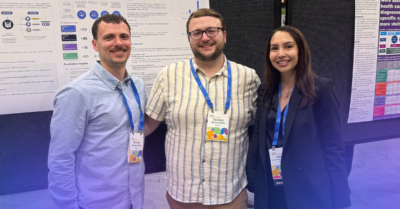
At the 2026 AcademyHealth Annual Research Meeting (ARM), healthcare leaders, educators, state agencies, community-based organizations, and technology partners gathered to explore the future of health and community-based support. Unite Us’ Research and Evaluation team—including Dr. Halima Ahmadi-Montecalvo and Dr. Zack White—presented across multiple sessions, exploring emerging evidence, innovative methodologies, and actionable insights that help drive more effective, and measurable care outcomes. Across presentations, experts emphasized that lasting impact depends on building the infrastructure that allows organizations to collaborate, coordinate resources, and respond collectively to community needs.
Here’s a look at some key insights from the event:
Caring in Isolation: Social Needs and Mental Health Outcomes Among Informal Caregivers in the U.S.
In this discussion, Halima Ahmadi-Montecalvo, PhD, MPH, shared findings that caregivers experiencing non-medical needs are associated with increased risk of adverse mental health outcomes.
The research highlighted that caregivers often interact with multiple systems but remain largely invisible within them. Identifying caregivers, screening for health-related social needs (HRSNs), and connecting them to support services requires coordination across healthcare providers, public health agencies, and community organizations. Dr. Ahmadi-Montecalvo highlighted that integrating caregiver identification, HRSN screening, and social support services into public health and healthcare delivery systems may mitigate mental health risks among caregivers.
A Mixed-Methods Evaluation of Santa Fe County’s Connect Program: Impacts of a Countywide Closed-Loop Care Coordination Platform
Santa Fe County’s CONNECT program was developed to address residents’ HRSNs through cross-sector care coordination. The study evaluated the transition from fragmented, manual referral processes to a unified countywide closed-loop social care coordination platform.
The results demonstrated that when organizations share a common system for communication, referrals, and follow-up, they can work together more efficiently and effectively. This platform substantially improved efficiency, accountability, and outcomes for residents while generating an estimated $13.4 million in healthcare cost savings.
Strengthening Rural Health Systems: The Role of Digital Platforms in Addressing Upstream Drivers of Health
States have the opportunity to expand access to rural health care and improve health outcomes through the Rural Health Transformation Program. However, realizing the full value of these investments requires addressing the economic, social, and environmental factors that influence health.
Our Research and Evaluation team highlighted the Missouri ToRCH initiative, an innovative effort designed to address the interconnected challenges facing rural communities. Unite Us serves as the technology backbone connecting hospitals and community-based organizations through a Community Information Exchange (CIE). In partnership with six Missouri counties, the initiative established hospitals as centralized hubs for care coordination, enabling providers to connect patients with community services that address non-medical needs.
One participating hospital system documented measurable improvements in clinical quality, including a 19.6% increase in controlled blood pressure and an 18% increase in behavioral health follow-up after emergency department visits. Eighty-eight percent of end users agreed the model improved overall patient care, and a majority reported reduced stress related to documentation and follow-up.
The findings demonstrate that when communities invest in shared infrastructure connecting healthcare providers and community organizations, rural health systems can coordinate resources more effectively and deliver better patient outcomes.
Looking Ahead
The research presented at ARM 2026 highlighted that improving outcomes requires more than expanding services; it requires strengthening the infrastructure that connects organizations delivering that care in the first place.
Whether supporting caregivers, coordinating social care, or addressing rural health challenges, the most promising approaches focused on helping existing organizations work together more effectively.